Catalogues
For projects that need attribution, provenance, bibliography, editorial review, versioning, and long-term scholarly consistency. Œuvre System keeps records stable, traceable, and publication-ready as research develops.
Archives
For archives where material is still being identified, described and connected. Œuvre System documents uncertainty, links fragments, and prepares selected records for publication, with optional ISAD(G) compatibility.
Collections
For artists, estates, and smaller initiatives that need structured documentation and public presentation without a heavy collections-management system. Œuvre System stores records, media, notes and relationships in one place, then turns the material into public-facing views.
For individual researchers
Build a corpus gradually, work with uncertainty, connect records, and prepare material for publication without relying on spreadsheets and scattered notes.
For artists’ estates and foundations
Create a shared research environment with annotations, editorial history, and structured workflows for catalogues, archives and collections.
For smaller institutions
Add a research and publication layer for scholarly work, editorial control, and legacy data organisation — without forcing every project into a rigid collections-management model.
Features preview
Keeps research and publishing aligned
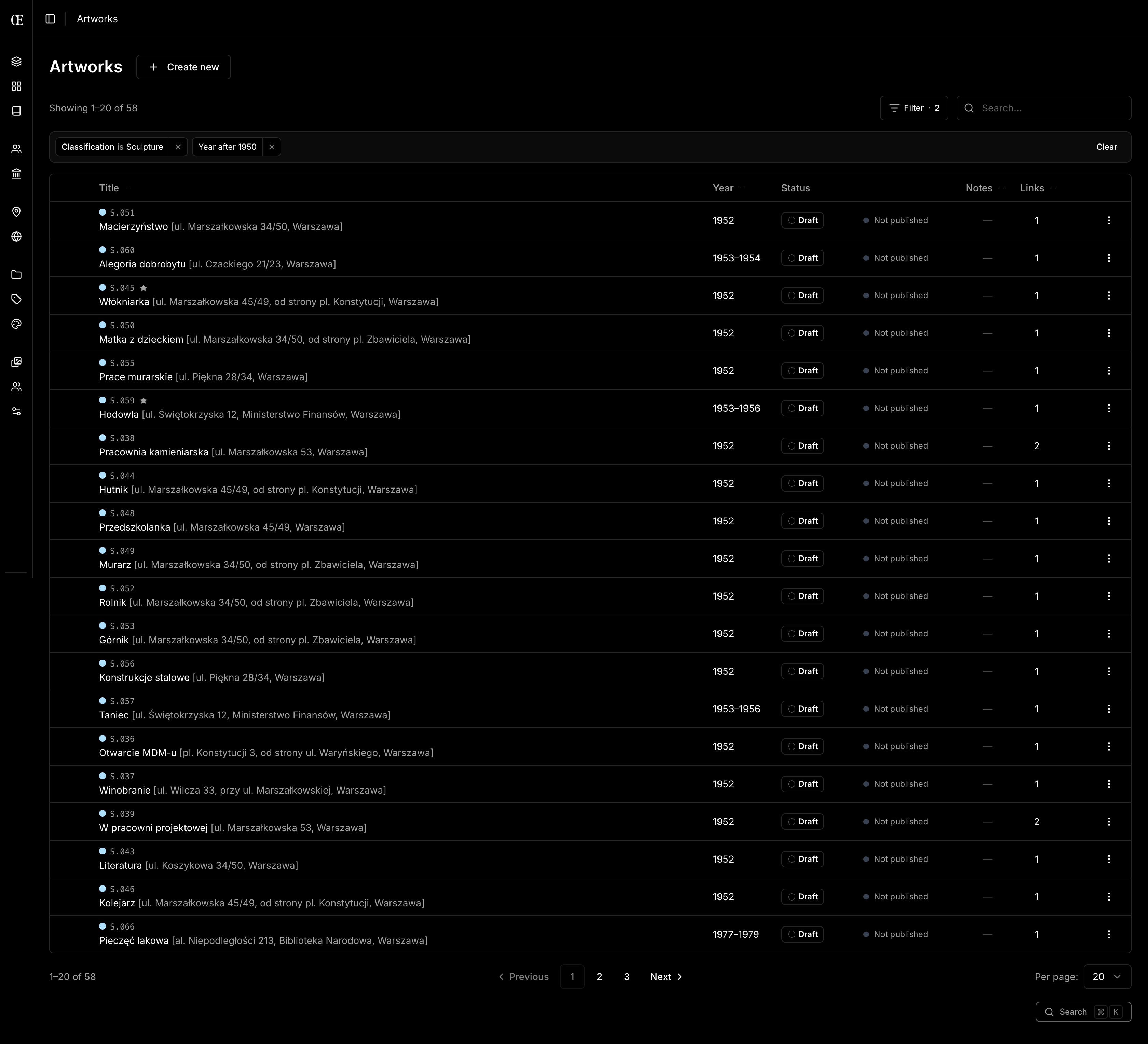
Research and publishing often live in separate systems. Records are developed in spreadsheets, then copied into a website or CMS. Over time, the source data and the published version diverge. Œuvre System is designed to keep them connected.
Handles complex cultural data
Œuvre System supports data as it actually appears in research and publishing work: uneven, uncertain, evolving, and often more complex than generic tools are prepared to handle. It allows records to remain usable without forcing them into oversimplified or brittle editorial workarounds.
Supports multilingual record management
Multilingual records stay connected to the same underlying structure. Œuvre System manages translations, editorial status, and publication readiness without creating separate, drifting versions of the same material.
Tracks editorial changes clearly
Œuvre System records who changed what and why, making editorial decisions easy to follow. This supports collaboration, review, and reliable history of how records evolved. This is especially important in projects where records are revised gradually, shared across contributors, or prepared for publication over a long period.
Gives research notes a proper place
Research notes do not have to live in a separate document, spreadsheet, or folder. Œuvre System keeps annotations, references, links, and working observations directly connected to the record they concern, while keeping them distinct from published content.
Fits different ways of working
Œuvre System supports both individual research practice and collaborative editorial work. It can stay lightweight for solo projects or become more structured for teams that need clearer rules and publication criteria.
Carries forward legacy data
Œuvre System is designed to accommodate material that already exists in spreadsheets, documents, or earlier project systems, so users can bring an existing project into a more coherent research and publishing environment.
Adapts presentation to the project
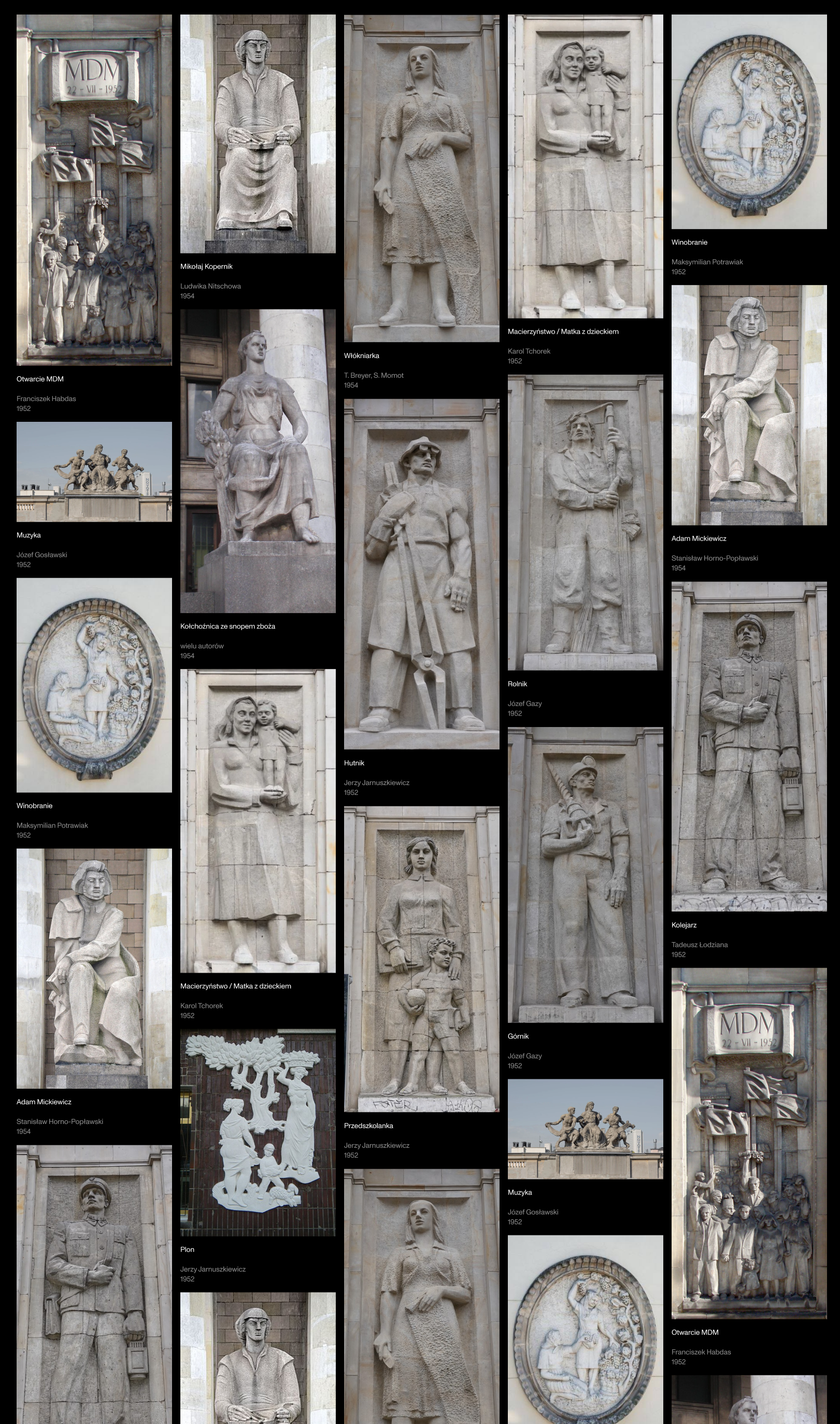
The same structured record set can support more than one form of presentation. Œuvre System includes a fast built-in browsing interface and can also support custom frontends, map-based views, visualizations, and PDF or print exports from the same underlying data.
Supports sustained attention
Œuvre System is designed for long sessions with complex material. A restrained, dark interface keeps the focus on records, notes, and editorial decisions without adding visual noise to already demanding work.
Early access
Œuvre System is still taking shape. Follow its development.
Join the mailing list for occasional updates, research notes and future access announcements.
contact
For pilot implementations, demonstrations, research collaborations, or institutional use, please get in touch directly.
contact@oeuvresystem.pro